Career Wave
IMD Scientific Assistant Physics Test Series 2026: Complete Part-F Practice with Career Wave
Preparing for the IMD Scientific Assistant 2026 Physics examination is not only about completing the syllabus. The real challenge is converting concepts into marks under exam pressure.
For candidates opting for Part-F Physics, regular practice through a structured test series is essential because the syllabus covers a wide range of graduation-level topics such as Mathematical Methods, Mechanics, Optics, Electricity, Magnetism, Thermodynamics, Modern Physics, Solid State Physics, Semiconductor Devices and Electronics.
To help students prepare in an exam-oriented way, Career Wave has introduced the SSC IMD Scientific Assistant Physics Test Series 2026, specially designed for candidates preparing for the complete Part-F Physics syllabus.
With guidance from Satyendra Sir, the focus is simple:
Complete the concept → Practice chapter-wise → Analyse mistakes → Improve accuracy → Attempt full mocks.
IMD Scientific Assistant Physics Test Series 2026
The Career Wave test series is designed for students who want systematic practice for IMD Scientific Assistant Part-F Physics.
Test Series Link
https://careerwave.org/test-series/33-ssc-imd-scientific-assistant-physics-test-series-2026
Students who want complete preparation support can also join the full preparation batch.
Complete Preparation Batch
Why Is a Physics Test Series Important for IMD 2026?
Many students complete lectures and notes but delay solving tests.
This creates a major problem.
You may understand a chapter while watching a lecture, but the exam checks whether you can:
• identify the correct concept quickly
• recall the required formula
• handle calculations accurately
• eliminate wrong options
• manage negative marking
• solve within limited time
That is why Satyendra Sir recommends starting test practice along with syllabus completion instead of waiting for the entire course to finish.
Complete Part-F Physics Coverage
The IMD Scientific Assistant Part-F syllabus includes major areas of graduation-level Physics.
The test preparation should therefore cover the complete official syllabus, including:
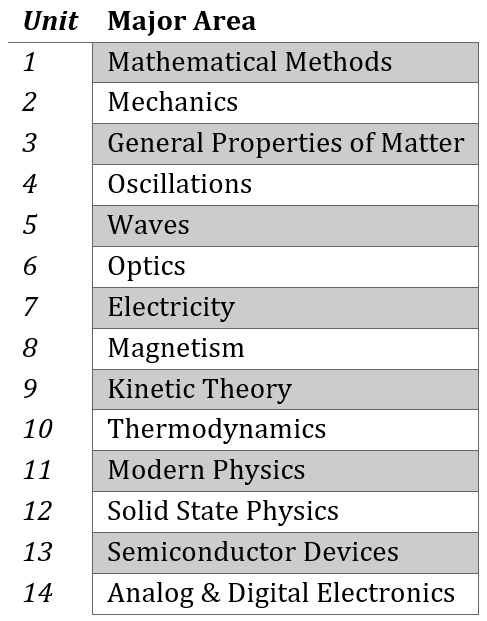
For serious preparation, students should not depend only on a few high-weightage chapters. The complete Part-F syllabus needs coverage.
1. Mathematical Methods Tests
Mathematical Methods form the foundation of several advanced Physics chapters.
Important areas include:
• Calculus
• Integral Calculus
• Differential Equations
• Fourier Series
• Taylor Expansion
• Vector Algebra
• Vector Calculus
• Linear Algebra
• Complex Numbers
• Statistics
• Error Analysis
Testing this section helps students improve both mathematical speed and application.
2. Mechanics Tests
Mechanics can include conceptual as well as numerical questions.
Important topics include:
• Newton's Laws
• Kinematics
• Inertial and non-inertial frames
• Centrifugal force
• Coriolis force
• Central force motion
• Kepler's Laws
• Gravitation
• Conservation laws
• Collisions
• Moment of inertia
• Rigid body dynamics
Students should focus on identifying the governing principle before starting calculations.
3. Properties of Matter Tests
This section covers:
• Elasticity
• Surface tension
• Viscosity
• Fluid dynamics
• Continuity equation
• Euler's equation
• Bernoulli's theorem
A test series helps students distinguish between formulas that often look similar but apply under different physical conditions.
4. Oscillations and Waves Tests
Important concepts include:
• Simple Harmonic Motion
• Superposition of SHM
• Lissajous figures
• Damped oscillations
• Forced oscillations
• Resonance
• Quality factor
• Wave equation
• Standing waves
• Group velocity
• Phase velocity
• Doppler effect
These topics require both conceptual clarity and formula recall.
5. Optics Tests
Optics is another major Part-F area.
Questions may be based on:
• Reflection
• Refraction
• Mirrors
• Lenses
• Fermat's principle
• Interference
• Diffraction
• Resolving power
• Diffraction grating
• Polarization
• Double refraction
• Optical rotation
Students should practise diagrams, conditions and numerical relations.
6. Electricity Tests
Electricity includes several important scoring areas:
• Coulomb's Law
• Electric field
• Electric potential
• Gauss's Law
• Conductors
• Dielectrics
• Capacitance
• Electrostatic energy
• Current density
• Ohm's Law
• DC circuits
• AC circuits
• RC, LC and LCR circuits
• Resonance
According to Career Wave, Electricity should be practised repeatedly because one small conceptual mistake can change the entire numerical solution.
7. Magnetism Tests
The Magnetism section includes:
• Magnetic field
• Biot-Savart Law
• Ampere's Law
• Lorentz force
• Motion of charged particles
• Electromagnetic induction
• Faraday's Law
• Self and mutual induction
• Maxwell's equations
• Displacement current
• Electromagnetic waves
• Poynting vector
This section often combines conceptual understanding with mathematical application.
8. Kinetic Theory Tests
Important areas include:
• Ideal gas equation
• Degrees of freedom
• Equipartition theorem
• Specific heat
• Maxwell velocity distribution
• Most probable velocity
• Mean velocity
• RMS velocity
• Mean free path
• Van der Waals equation
Regular tests make formula revision much easier.
9. Thermodynamics Tests
Thermodynamics requires careful preparation because the syllabus goes beyond basic laws.
Important areas include:
• Laws of Thermodynamics
• Isothermal process
• Adiabatic process
• Isobaric process
• Isochoric process
• Entropy
• Carnot cycle
• Heat engines
• Thermodynamic potentials
• Maxwell relations
• Phase transitions
• Clausius-Clapeyron equation
• Maxwell-Boltzmann distribution
• Fermi-Dirac distribution
• Bose-Einstein distribution
A structured test series helps identify weak subtopics within this large unit.
10. Modern Physics Tests
Modern Physics is an important area for IMD Scientific Assistant Physics preparation.
The syllabus includes:
• Special Relativity
• Black Body Radiation
• Photoelectric Effect
• Compton Effect
• De Broglie Waves
• Uncertainty Principle
• X-rays
• Schrödinger Equation
• Particle in a Box
• Quantum Tunneling
• Bohr Model
• Atomic Spectra
• Nuclear Physics
• Binding Energy
• Radioactivity
Students should combine theoretical revision with numerical practice.
11. Solid State Physics Tests
Important topics include:
• Crystal structure
• Unit cell
• Bravais lattices
• Miller indices
• Bragg's Law
• X-ray diffraction
• Band theory
• Fermi energy
• Fermi level
• Intrinsic semiconductors
• Extrinsic semiconductors
• Conductivity
This is a topic where repeated MCQ practice can significantly improve accuracy.
12. Semiconductor Devices Tests
Students should prepare:
• PN Junction Diode
• Diode characteristics
• Zener diode
• Rectifiers
• BJT
• Common Base
• Common Emitter
• Common Collector
• Transistor characteristics
This section is highly suitable for objective-question practice.
13. Analog and Digital Electronics Tests
Important areas include:
• Amplifiers
• RC-coupled amplifiers
• Oscillators
• Barkhausen condition
• Operational Amplifier
• Inverting amplifier
• Non-inverting amplifier
• Integrator
• Differentiator
• Boolean algebra
• Binary number system
• Logic gates
• De Morgan's theorem
Students should practise both circuit-based and logic-based questions.
How to Use the Career Wave IMD Physics Test Series
Simply attempting tests is not enough.
Satyendra Sir recommends following a proper test-analysis cycle.
Step 1: Study the Chapter
Complete the concept and formula revision first.
Step 2: Attempt the Chapter Test
Attempt without referring to notes.
Step 3: Check Accuracy
Do not look only at marks.
Analyse:
• correct questions
• incorrect questions
• guessed questions
• unanswered questions
Step 4: Identify the Reason for Every Mistake
Every wrong answer generally comes from one of four problems:
• concept not clear
• formula forgotten
• calculation error
• question misread
Step 5: Revise Weak Concepts
Go back only to the areas where mistakes occurred.
Step 6: Reattempt Similar Questions
This converts mistakes into learning.
Why Mock Analysis Matters More Than Mock Count
Some students say:
“I have attempted 30 mocks.”
But if the same mistakes are repeated in every mock, the number of tests does not matter.
At Career Wave, the focus is on:
Test → Analysis → Correction → Revision → Retest
This process helps students steadily increase their accuracy.
Negative Marking Makes Accuracy Important
The IMD Scientific Assistant examination includes negative marking.
Therefore, test practice should help you decide:
• which questions to attempt immediately
• which questions need calculation
• which questions should be reviewed
• which questions should be left
A strong candidate is not the one who attempts everything.
A strong candidate is the one who maximizes net score.
Chapter Tests vs Full-Length Tests
Both are important, but they serve different purposes.
Chapter-Wise Tests
Useful for:
• concept strengthening
• formula revision
• finding weak chapters
• immediate practice after classes
Mixed Tests
Useful for:
• switching between concepts
• increasing recall speed
• improving question selection
Full-Length Tests
Useful for:
• exam temperament
• time management
• accuracy under pressure
• final preparation
Who Should Join the IMD Physics Test Series?
The test series can be useful for:
• B.Sc Physics candidates
• eligible Physics-stream candidates
• students who have completed the syllabus
• students currently completing the syllabus
• candidates who need structured practice
• students preparing through self-study
• students enrolled in the Career Wave preparation batch
Career Wave IMD Scientific Assistant Complete Batch
Students who require complete preparation rather than only tests can join the SSC IMD Scientific Assistant 2026 Complete Preparation Batch by Career Wave.
Batch Link
The batch can be used along with the test series so that preparation follows a structured sequence:
Learn → Revise → Practice → Test → Analyse
Career Wave's Preparation Approach
For Satyendra Sir and Career Wave, the target is not just syllabus completion.
The actual target is:
Exam-ready Physics.
Students should reach a stage where they can:
• identify the concept quickly
• recall formulas without confusion
• solve numericals accurately
• handle theoretical questions
• manage negative marking
• maintain speed
• perform consistently in mocks
Final Conclusion
The IMD Scientific Assistant Physics Test Series 2026 should be treated as an essential part of preparation for candidates opting for Part-F Physics.
Completing lectures gives you knowledge.
Solving tests shows whether you can use that knowledge in the exam.
The best approach is:
Complete Chapter → Revise Formula → Attempt Test → Analyse Mistakes → Revise Weak Areas → Retest
Students preparing for IMD Scientific Assistant Physics can use the Career Wave Test Series for structured Part-F practice and follow Satyendra Sir for Physics preparation, PYQs, exam strategy and guidance.
IMD Physics Test Series
https://careerwave.org/test-series/33-ssc-imd-scientific-assistant-physics-test-series-2026
Complete IMD Preparation Batch
FAQs –
1. What is the Career Wave IMD Scientific Assistant Physics Test Series?
It is a test series for candidates preparing for the IMD Scientific Assistant 2026 Part-F Physics examination.
2. Does the test series target Part-F Physics?
Yes. It is designed around the Physics preparation required for IMD Scientific Assistant Part-F candidates.
3. What topics should I practise for Part-F Physics?
Students should prepare Mathematical Methods, Mechanics, Properties of Matter, Oscillations, Waves, Optics, Electricity, Magnetism, Kinetic Theory, Thermodynamics, Modern Physics, Solid State Physics, Semiconductor Devices and Analog & Digital Electronics.
4. Should I start tests only after completing the entire syllabus?
No. Satyendra Sir recommends attempting chapter-wise tests while completing the syllabus.
5. Should I attempt every question in a mock?
Not necessarily. Because of negative marking, students should focus on maximizing their net score rather than blindly maximizing attempts.
6. Is formula revision important before tests?
Yes. Regular formula revision improves speed and reduces unnecessary mistakes.
7. Can self-study students use this test series?
Yes. Students preparing independently can use structured tests to measure their preparation.
8. Can Career Wave batch students also use the test series?
Yes. Combining classes with regular test practice creates a stronger preparation cycle.
9. Where can I join the IMD Physics Test Series?
Visit:
https://careerwave.org/test-series/33-ssc-imd-scientific-assistant-physics-test-series-2026
10. Where can I join the complete IMD Scientific Assistant batch?
Visit:
11. Who guides Physics preparation at Career Wave?
Students can follow Satyendra Sir for IMD Scientific Assistant Physics concepts, PYQs, test strategy and exam-oriented preparation.
Connect With Career Wave
YouTube:
https://www.youtube.com/@CAREERWAVE
Telegram:
https://t.me/aai_atc
Instagram:
https://www.instagram.com/careerwave.atc
Facebook:
https://www.facebook.com/careerwave.atc
Test Series:
https://careerwave.org/test-series/33-ssc-imd-scientific-assistant-physics-test-series-2026
Complete Preparation Batch:
https://careerwave.org/new-courses/71-ssc-imd-scientific-assistant-2026-complete-preparation-batch-career-wave
Career Wave — Learn with Satyendra Sir, practise systematically and prepare for selection.