Career Wave
IMD Physics Part-F Test Series 2026: Chapter-Wise + Full Mock Strategy
Preparing for SSC IMD Scientific Assistant 2026 Physics requires more than finishing the syllabus once. Part-F includes a broad set of graduation-level Physics topics, so students need a structured testing plan that checks both chapter-level understanding and complete exam performance.
At Career Wave, Satyendra Sir recommends a simple sequence:
Concept → Chapter Test → Analysis → Revision → Mixed Practice → Full Mock
This approach helps students improve gradually instead of jumping directly into full mocks without understanding their weak areas.
Career Wave IMD Physics Part-F Test Series 2026
The Career Wave SSC IMD Scientific Assistant [Physics] Test Series 2026 is designed around:
• Previous Year Papers
• Chapter-Wise / Sectional Tests
• Full-Length Physics Mock Tests
• Detailed Solutions
• Performance Analytics
• All-India Rank
• Leaderboard
• Real Exam-Oriented Practice
Test Series Link
https://careerwave.org/test-series/33-ssc-imd-scientific-assistant-physics-test-series-2026
Complete Preparation Batch
Why Chapter-Wise Testing Matters
Chapter-wise tests are useful because they tell you whether a topic has actually been understood.
For example, after completing Mechanics, a student may feel confident. But a test can reveal that:
• concepts are clear but calculations are slow
• formulas are being mixed up
• certain subtopics are weak
• questions are being misread
• too much time is being spent on numericals
That feedback is valuable because it tells you what to revise next.
Chapter-Wise Strategy for Part-F Physics
The Part-F syllabus broadly covers:
1. Mathematical Methods
2. Mechanics
3. General Properties of Matter
4. Oscillations
5. Waves
6. Optics
7. Electricity
8. Magnetism
9. Kinetic Theory
10. Thermodynamics
11. Modern Physics
12. Solid State Physics
13. Semiconductor Devices
14. Analog & Digital Electronics
The right strategy is not to complete all 14 units and then start testing.
A better approach is to test every major unit soon after revision.
1. Mathematical Methods Test Strategy
Focus on:
• Calculus
• Differential Equations
• Fourier Series
• Taylor Expansion
• Vector Algebra
• Vector Calculus
• Linear Algebra
• Complex Numbers
• Statistics
• Error Analysis
Best Practice
Attempt short topic tests first, then combine Mathematical Methods with other calculation-heavy chapters.
2. Mechanics Test Strategy
Practice:
• Newton’s Laws
• Kinematics
• Inertial and non-inertial frames
• Centrifugal and Coriolis forces
• Central force motion
• Gravitation
• Conservation laws
• Collisions
• Moment of inertia
• Rigid body dynamics
Best Practice
Separate direct concept questions from lengthy numericals. This helps improve question selection.
3. Properties of Matter Test Strategy
Important areas include:
• Elasticity
• Surface tension
• Viscosity
• Fluid dynamics
• Continuity equation
• Euler’s equation
• Bernoulli’s theorem
Best Practice
Focus on formula application and physical interpretation.
4. Oscillations & Waves Test Strategy
Prepare:
• SHM
• Superposition
• Lissajous figures
• Damped oscillations
• Forced oscillations
• Resonance
• Wave equation
• Standing waves
• Group velocity
• Phase velocity
• Doppler effect
Best Practice
Keep a compact formula sheet for quick revision before tests.
5. Optics Test Strategy
Practice:
• Reflection
• Refraction
• Mirrors
• Lenses
• Interference
• Diffraction
• Resolving power
• Diffraction grating
• Polarization
• Double refraction
• Optical rotation
Best Practice
Combine direct theory with numerical questions.
6. Electricity Test Strategy
Focus on:
• Coulomb’s Law
• Electric field
• Electric potential
• Gauss’s Law
• Conductors and dielectrics
• Capacitance
• Electrostatic energy
• Current and current density
• Ohm’s Law
• DC circuits
• AC circuits
• RC, LC and LCR circuits
• Resonance
Best Practice
This is a broad unit, so divide it into sub-tests before attempting one complete Electricity test.
7. Magnetism Test Strategy
Practice:
• Magnetic field
• Biot-Savart Law
• Ampere’s Law
• Lorentz force
• Charged particle motion
• Electromagnetic induction
• Faraday’s Law
• Self and mutual induction
• Maxwell’s equations
• EM waves
• Poynting vector
Best Practice
Track conceptual errors separately from calculation errors.
8. Kinetic Theory & Thermodynamics Test Strategy
Important areas include:
• Degrees of freedom
• Equipartition theorem
• Specific heat
• Maxwell distribution
• RMS speed
• Mean free path
• Thermodynamic laws
• Entropy
• Carnot cycle
• Maxwell relations
• Thermodynamic potentials
• Statistical distributions
Best Practice
Revise definitions, processes and formulas together before testing.
9. Modern Physics Test Strategy
Practice:
• Special Relativity
• Black Body Radiation
• Photoelectric Effect
• Compton Effect
• De Broglie Waves
• Uncertainty Principle
• X-rays
• Schrödinger Equation
• Particle in a Box
• Bohr Model
• Atomic Spectra
• Nuclear Physics
• Radioactivity
Best Practice
Modern Physics often contains both direct theory and formula-based questions, so practise both styles.
10. Solid State + Semiconductor Test Strategy
Focus on:
• Crystal structure
• Unit cell
• Bravais lattices
• Miller indices
• Bragg’s Law
• Band theory
• Fermi level
• Intrinsic and extrinsic semiconductors
• PN Junction
• Zener diode
• Rectifiers
• BJT
• Transistor configurations
Best Practice
These areas respond well to repeated MCQ practice.
11. Analog & Digital Electronics Test Strategy
Practice:
• Amplifiers
• Oscillators
• Barkhausen condition
• OPAMP
• Inverting and non-inverting amplifier
• Integrator
• Differentiator
• Boolean algebra
• Binary system
• Logic gates
• De Morgan’s theorem
Best Practice
Use short timed tests because many questions can be solved quickly once concepts are clear.
When Should You Start Full Mock Tests?
Do not wait for complete perfection.
A practical progression is:
Stage 1: Early Preparation
Chapter-wise tests
Stage 2: Mid Preparation
Mixed-topic tests
Stage 3: Advanced Preparation
Full-length mocks
Stage 4: Final Revision
Full mocks + reattempt + weak-area revision
This gives students enough time to improve before the actual exam.
Why Full Mocks Are Necessary
Chapter tests tell you whether a chapter is strong.
Full mocks tell you whether your overall preparation is exam-ready.
They help improve:
• Time management
• Question selection
• Calculation speed
• Accuracy
• Concentration
• Decision-making
• Exam temperament
At Career Wave, Satyendra Sir recommends treating every full mock as a simulation of the actual exam.
Full Mock Strategy by Satyendra Sir
Use a three-round approach.
Round 1: Direct Questions
Attempt questions you can solve quickly and confidently.
Round 2: Moderate Questions
Return to questions requiring calculation or more thought.
Round 3: Review
Use remaining time for marked questions and checking.
This prevents students from getting stuck on one difficult question.
How to Analyse Every Full Mock
After the test, record:
• Total score
• Correct answers
• Wrong answers
• Unattempted questions
• Accuracy
• Time spent
• Strong chapters
• Weak chapters
• Repeated mistakes
Then classify every wrong answer into:
• Concept error
• Formula error
• Calculation error
• Reading error
• Guessing error
This makes revision precise.
Previous Year Papers Should Come First
The Career Wave test series includes previous year paper practice so students can understand the real nature of SSC IMD Physics questions.
Previous year papers help you identify:
• actual question level
• recurring topics
• important chapters
• numerical depth
• theoretical patterns
• common question styles
According to Satyendra Sir, PYQs should be attempted before relying heavily on predicted questions.
Career Wave Test Series Preparation Cycle
A strong sequence is:
Previous Year Papers → Chapter Tests → Mixed Tests → Full Mocks → Analytics → Revision → Reattempt
This is more effective than solving random questions without tracking performance.
Detailed Solutions Matter
A test is useful only if students learn from mistakes.
The Career Wave test series focuses on exam-oriented solutions that help students understand:
• correct concept
• required formula
• necessary calculation
• quick solving approach
• reason behind the correct answer
The goal is not to memorize answers.
The goal is to solve similar questions correctly next time.
Use Performance Analytics Properly
Analytics should help you answer:
• Which chapter is weakest?
• Where is accuracy falling?
• Which questions consume too much time?
• Are marks improving?
• Are repeated mistakes reducing?
• Is full-mock performance becoming stable?
This makes preparation more data-driven.
Chapter Tests vs Full Mocks
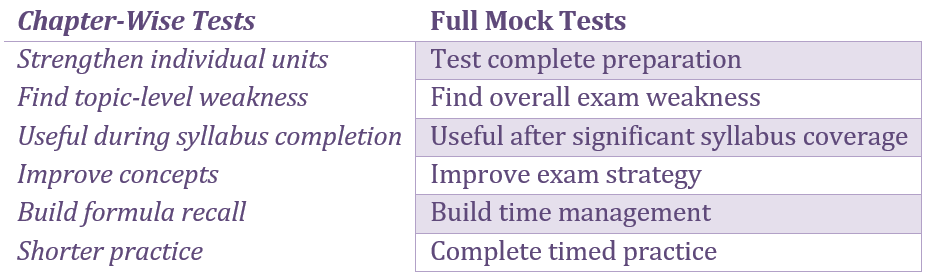
Both are necessary.
Who Should Join the Career Wave IMD Physics Test Series?
The test series is useful for:
• SSC IMD Scientific Assistant 2026 Physics aspirants
• Students preparing Part-F Physics
• Candidates looking for PYQ practice
• Students who need chapter-wise tests
• Aspirants who need full mocks
• Self-study candidates
• Students struggling with accuracy
• Candidates who want performance analytics and ranking
• Career Wave batch students
Career Wave Complete Preparation Batch
Students who need concept classes along with testing can join the SSC IMD Scientific Assistant 2026 Complete Preparation Batch.
Batch Link
The ideal preparation system becomes:
Class → Notes → Revision → Chapter Test → PYQ → Full Mock → Analysis
Final Strategy
The right IMD Physics Part-F test strategy is not:
Complete everything first, then start mocks.
It is:
Study a chapter → Test it → Analyse it → Fix weakness → Move forward → Start mixed tests → Attempt full mocks
According to Satyendra Sir, every test should answer one question:
“What should I improve next?”
That is the real purpose of a test series.
For structured preparation, students can use the Career Wave IMD Scientific Assistant Physics Test Series 2026 along with the complete preparation batch.
Join the Physics Test Series
https://careerwave.org/test-series/33-ssc-imd-scientific-assistant-physics-test-series-2026
Join the Complete Batch
FAQs –
1. What is the IMD Physics Part-F Test Series 2026?
It is a structured Physics practice system for SSC IMD Scientific Assistant candidates, using PYQs, chapter-wise tests, sectional practice and full mocks.
2. Should I start with chapter-wise tests?
Yes. Chapter-wise tests are useful during syllabus completion because they immediately reveal weak concepts.
3. When should I start full mocks?
Start full mocks once a significant portion of the syllabus is complete and your basic concepts are reasonably strong.
4. Are chapter tests enough for final preparation?
No. Full mocks are also necessary for time management, question selection, concentration and exam temperament.
5. Should I solve PYQs before mock tests?
Yes. Previous year papers help you understand the actual level and style of SSC IMD Physics questions.
6. What should I analyse after a chapter test?
Check wrong answers, weak concepts, forgotten formulas, calculation mistakes and time-consuming questions.
7. What should I analyse after a full mock?
Check score, accuracy, total attempts, time, wrong answers, skipped questions and chapter-wise performance.
8. Is Mathematical Methods important for Part-F?
Yes. It supports many other Physics chapters and should be tested regularly.
9. Which chapters should be tested separately?
Large units such as Electricity, Magnetism, Thermodynamics, Mechanics and Modern Physics can benefit from separate chapter-wise tests.
10. Does Career Wave provide previous year papers?
The Career Wave Physics Test Series includes available SSC IMD Physics previous year paper practice as listed on the test-series page.
11. Can self-study students use the test series?
Yes. It is suitable for students who need structured practice even if they are preparing independently.
12. Where can I join the test series?
https://careerwave.org/test-series/33-ssc-imd-scientific-assistant-physics-test-series-2026
13. Where can I join the complete Career Wave batch?
Connect With Career Wave
YouTube:
https://www.youtube.com/@CAREERWAVE
Telegram:
https://t.me/aai_atc
Instagram:
https://www.instagram.com/careerwave.atc
Facebook:
https://www.facebook.com/careerwave.atc
Physics Test Series:
https://careerwave.org/test-series/33-ssc-imd-scientific-assistant-physics-test-series-2026
Complete Preparation Batch:
https://careerwave.org/new-courses/71-ssc-imd-scientific-assistant-2026-complete-preparation-batch-career-wave
Career Wave — Build chapter strength first, then convert it into full-mock performance with Satyendra Sir.