Essays | December 2025 | 8 Min Read
Rajasthan Police SI Physical Test: Height, Chest, Running and PET/PST Requirements
Becoming a Rajasthan Police Sub-Inspector (SI) requires more than clearing the written examination. Candidates must also meet the prescribed physical standards and demonstrate physical efficiency according to the recruitment rules. Height, chest measurements, running speed, jumping ability and other fitness requirements are important parts of physical test preparation. Understanding these requirements early can help aspirants identify areas that need improvement and prepare with a clear plan.
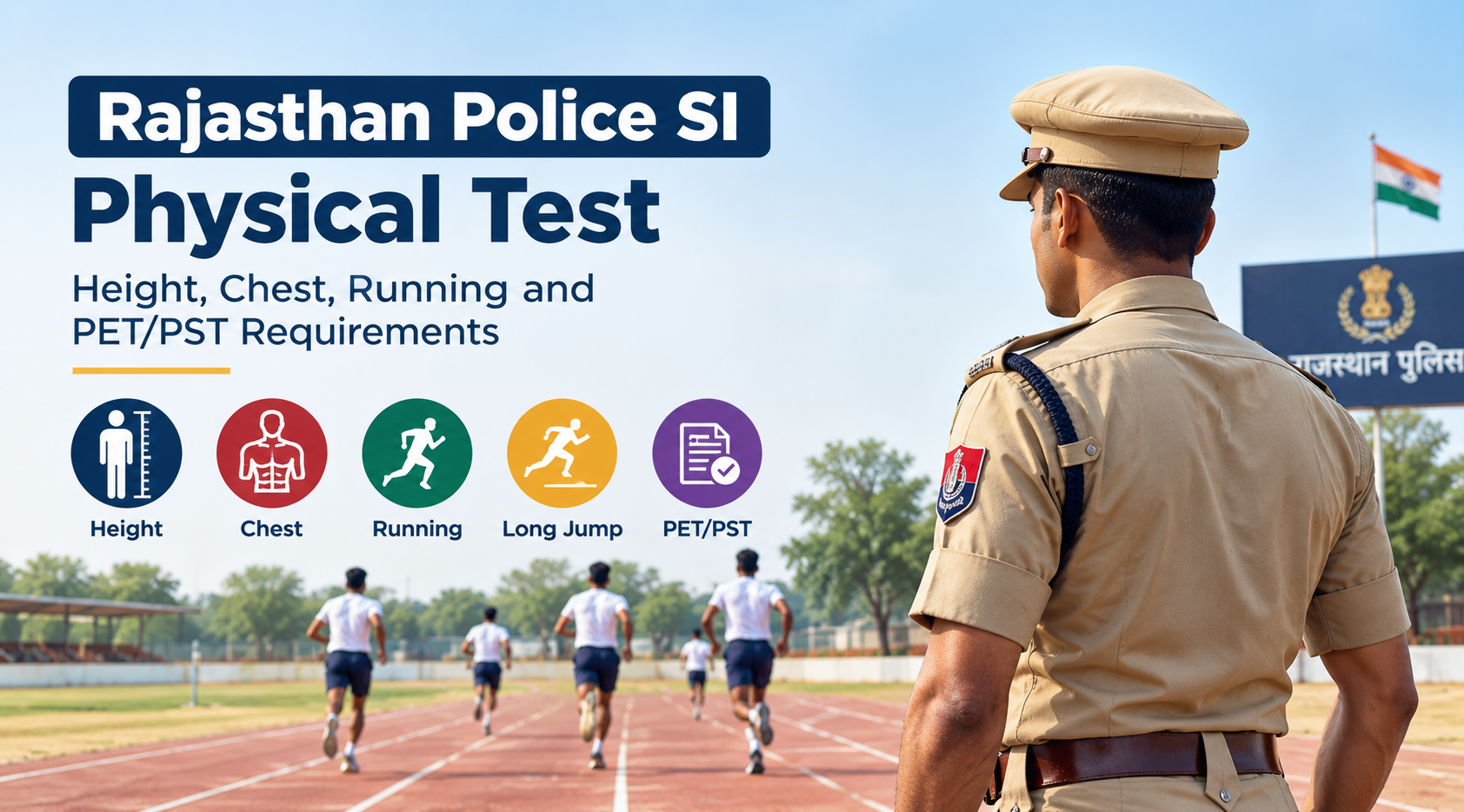
The Rajasthan Police SI physical test includes Physical Standard Test (PST) requirements and a Physical Efficiency Test (PET), as prescribed in the applicable recruitment notification. Candidates preparing for the Rajasthan SI examination should understand the required height and chest measurements, the 100-metre race, long jump and other scored events. This guide explains the main Rajasthan SI physical standards, PET scoring criteria and preparation tips to help candidates prepare confidently.
What Is the Rajasthan Police SI Physical Test?
The Rajasthan Police Sub-Inspector physical test is an important stage of the recruitment process. It assesses whether candidates meet the prescribed physical measurements and can complete the required physical efficiency events.
The physical test generally involves two key components:
1. Physical Standard Test (PST)
The Physical Standard Test checks whether candidates meet the minimum physical measurements prescribed for the post. These may include height and chest measurements for male candidates, and height and weight requirements for female candidates, as specified in the applicable rules.
Candidates who do not meet the required standards may be disqualified, subject to the provisions and relaxation rules in the recruitment notification.
2. Physical Efficiency Test (PET)
The Physical Efficiency Test evaluates candidates through specified physical activities. The RPSC SI/Platoon Commander 2025 scheme includes a 100-metre race and long jump, along with chinning up for male candidates and shot put for female candidates.
Candidates receive marks according to their performance in the prescribed events. Therefore, physical preparation should focus on both fitness and the specific scoring criteria.
Rajasthan Police SI Physical Standards: Height and Chest Requirements
Candidates should check the official physical standards before beginning their preparation. The following measurements are commonly referenced in Rajasthan Police SI recruitment rules. Applicants must confirm the requirements, category-based relaxations and any amendments applicable to their recruitment cycle.
1. Rajasthan Police SI Height Requirements
The commonly published standards for Rajasthan Police SI recruitment include:
- Male candidates: Minimum height of 168 cm.
- Female candidates: Minimum height of 152 cm.
- Eligible candidates from specified tribal or hilly areas: Relaxed standards may apply under the relevant recruitment rules.
For example, certain Rajasthan Police recruitment rules specify a minimum height of 160 cm for eligible male candidates from specified hilly or tribal areas. Eligibility for relaxation depends on the applicable provisions and supporting documentation.
Candidates should not assume that a relaxation applies automatically based only on residence or category. Check the relevant notification for eligibility conditions.
2. Rajasthan Police SI Chest Requirements
Chest measurements are generally prescribed for male candidates.
The commonly referenced standards are:
- Unexpanded chest: At least 81 cm.
- Expanded chest: At least 86 cm.
- Minimum expansion: 5 cm.
Certain eligible categories may receive relaxation in height and chest measurements under the applicable rules. Candidates should verify the exact requirements in the current recruitment notification before relying on a relaxed standard.
Female candidates should check the specific notification for their prescribed physical measurements and should not apply male chest criteria to their eligibility assessment.
3. Rajasthan Police SI Physical Standards: Important Points
Before attending the PST, candidates should:
- Check the latest recruitment notification.
- Confirm the physical standards for their category.
- Review the rules for any applicable relaxation.
- Carry the documents required to establish eligibility for a relaxation.
- Follow the recruitment board's instructions during measurement.
Physical measurements should be assessed using the prescribed procedure. Candidates who are unsure whether they meet a requirement should seek clarification through the official recruitment authority.
Rajasthan SI PET: Events and Marks
The RPSC Sub-Inspector/Platoon Commander Competitive Examination 2025 physical efficiency scheme lists three events for each main candidate category. Each event carries a maximum of 40, 30 or 30 marks, making the total 100 marks.
The scoring criteria below reflect the published 2025 scheme. Candidates should check the relevant notification for any later changes.
1. Rajasthan SI Running Test: 100-Metre Race
The 100-metre race tests acceleration, speed and the ability to maintain a fast pace over a short distance.
For male candidates, the published scoring criteria are:
- 14 seconds: 40 marks.
- 15 seconds: 25 marks.
- 16 seconds: 15 marks.
- Beyond 16 seconds: Zero marks.
For female candidates, the criteria are:
- 17 seconds: 40 marks.
- 18 seconds: 25 marks.
- 19 seconds: 15 marks.
- Beyond 19 seconds: Zero marks.
The 2025 scheme also lists separate criteria for ex-servicemen candidates. Applicants in this category should consult the relevant official document rather than applying the general male criteria.
These timings show why candidates should practise short-distance acceleration and sprint technique rather than preparing only through long-distance running.
2. Long Jump
The long jump assesses explosive leg power, coordination and jumping technique. Candidates should practise their approach, take-off and landing under suitable supervision.
For male candidates, the published criteria are:
- 15 feet or above: 30 marks.
- 14 feet: 20 marks.
- 13 feet: 10 marks.
- Below 13 feet: Zero marks.
For female candidates, the criteria are:
- 10 feet or above: 30 marks.
- 9 feet: 20 marks.
- 8 feet: 10 marks.
- Below 8 feet: Zero marks.
The scheme specifies separate long-jump criteria for ex-servicemen candidates as well. Candidates should practise according to the requirements applicable to their category.
3. Chinning Up for Male Candidates
Chinning up is an upper-body strength event in the published 2025 scheme for male candidates. It requires candidates to pull themselves upward on a bar using the prescribed technique.
The general male-candidate scoring criteria are:
- 7 repetitions: 30 marks.
- 6 repetitions: 20 marks.
- 5 repetitions: 10 marks.
- Fewer than 5 repetitions: Zero marks.
The scheme provides separate criteria for ex-servicemen candidates. Candidates should confirm the applicable scoring requirements before training for the event.
4. Shot Put for Female Candidates
Shot put tests explosive power, coordination and throwing technique. Candidates should practise the event with appropriate equipment and qualified supervision.
The published 2025 scheme specifies a 4 kg shot for female candidates, with the following scoring criteria:
- 16 feet: 30 marks.
- 15 feet: 20 marks.
- 14 feet: 10 marks.
- Below 14 feet: Zero marks.
Candidates should follow the prescribed technique and event rules. Incorrect technique can affect performance and increase the risk of injury.
Rajasthan Police SI PET and PST: How Does the Process Work?
The exact sequence and qualifying requirements depend on the recruitment notification and instructions issued by the recruitment authority. Candidates should understand the general purpose of each stage.
Step 1: Physical Measurement
The recruitment team checks the prescribed physical measurements, such as height and applicable chest or weight requirements.
Candidates must meet the standards relevant to their category and eligibility.
Step 2: Physical Efficiency Events
Candidates who qualify for the relevant stage participate in the prescribed athletic events. Performance is assessed using the applicable scoring criteria.
For the 2025 scheme, the events differ between male and female candidates, and separate criteria apply to ex-servicemen where specified.
Step 3: Result and Qualification
Candidates must satisfy the applicable qualifying conditions and any minimum marks prescribed for the physical efficiency test. They should read the official notification carefully because completing an event does not necessarily mean that all qualifying requirements have been met.
Step 4: Further Recruitment Stages
Candidates who qualify proceed according to the selection process set out in the applicable notification. The order of stages, document requirements, medical examination and other conditions should be confirmed from the official recruitment instructions.
How to Prepare for the Rajasthan SI Physical Test
Physical preparation should be gradual, consistent and specific to the events included in the recruitment scheme. Candidates should avoid sudden increases in training intensity.
1. Build Sprint Speed
Practise short-distance running to improve acceleration and running technique. Begin with a warm-up, mobility exercises and controlled runs before progressing to faster efforts.
Allow sufficient recovery between intense sprint sessions. Repeated all-out sprints without adequate rest can increase the risk of injury.
2. Improve Long-Jump Technique
Long-jump performance depends on speed, take-off coordination, explosive strength and landing technique.
Include suitable leg-strength exercises and supervised jumping drills in your routine. Practise on a safe surface and increase the intensity gradually.
3. Develop Upper-Body Strength
Male candidates preparing for chinning up can work on grip strength, pulling exercises and progressive bar practice.
Candidates who cannot yet complete a repetition should build strength gradually rather than forcing repeated attempts with poor technique.
4. Practise Shot Put Technique
Female candidates preparing for shot put should learn the correct grip, stance, movement and release technique.
Start with supervised technique drills and suitable practice loads. Increase training intensity only when movement is controlled and safe.
5. Follow a Balanced Fitness Routine
A useful preparation routine can include cardiovascular conditioning, strength training, mobility work and event-specific practice. Include rest days to allow recovery.
Eat balanced meals, stay hydrated and maintain a consistent sleep schedule. Candidates with existing injuries or health concerns should consult a qualified healthcare professional before starting demanding physical training.
6. Track Your Performance
Record sprint timings, long-jump distances and repetitions or throwing distances for the events relevant to your category.
Regular tracking helps identify progress and areas that need improvement. Practise under conditions that resemble the prescribed test, while avoiding excessive training immediately before the examination.
Common Mistakes to Avoid During SI Physical Preparation
Ignoring the Official Standards
Preparing without checking the prescribed measurements or scoring criteria can lead to wasted effort. Always use the notification relevant to your recruitment cycle.
Focusing Only on Running
The physical efficiency scheme includes events beyond the 100-metre race. Candidates should train for every event that applies to their category.
Increasing Training Too Quickly
Sudden increases in sprinting, jumping or strength-training volume can cause injuries. Progress gradually and allow adequate recovery.
Neglecting Technique
Correct technique matters in jumping, chinning up and shot put. Supervised practice can improve performance and reduce avoidable mistakes.
Leaving Preparation Until the Last Minute
Physical fitness develops over time. Start early, establish a realistic routine and review your progress regularly.
How Parishkar Classes Can Support Rajasthan SI Aspirants
Preparing for the Rajasthan Police SI examination requires a structured approach to the written examination and a clear understanding of the physical test requirements.
Parishkar Classes aspirants can organise their preparation by reviewing the latest recruitment notification, understanding the PST measurements and planning fitness practice around the prescribed PET events. Candidates should keep written-exam preparation and physical training on a consistent schedule instead of focusing exclusively on one stage.
A clear preparation plan, regular progress tracking and careful attention to official instructions can help aspirants approach the recruitment process with greater confidence.
Frequently Asked Questions (FAQs)
1. What is the minimum height for Rajasthan Police SI?
The commonly referenced minimum height is 168 cm for male candidates and 152 cm for female candidates. Eligible candidates may receive relaxation under applicable recruitment rules.
2. What is the chest measurement required for Rajasthan Police SI?
The commonly referenced standard for male candidates is 81 cm unexpanded and 86 cm expanded, with a minimum expansion of 5 cm. Candidates should verify the latest recruitment notification for applicable relaxations.
3. What is the running test for Rajasthan Police SI?
The RPSC SI/Platoon Commander 2025 physical efficiency scheme includes a 100-metre race. The scoring criteria vary by candidate category.
4. Which events are included in the Rajasthan Police SI PET?
The 2025 scheme lists a 100-metre race, long jump and chinning up for male candidates. Female candidates have a 100-metre race, long jump and shot put.
5. How many marks are allotted to the Rajasthan Police SI PET?
The published 2025 physical efficiency scheme assigns a total of 100 marks across three events. Candidates should check the applicable notification for qualifying requirements.
Conclusion
The Rajasthan Police SI physical test is an important part of the Sub-Inspector recruitment process. Candidates should understand the prescribed height and chest requirements, applicable physical measurement relaxations and the events included in the Physical Efficiency Test. The RPSC SI/Platoon Commander 2025 scheme includes a 100-metre race and long jump, along with chinning up for male candidates and shot put for female candidates. Since scoring criteria and eligibility conditions may vary by candidate category, the relevant recruitment notification should always be treated as the final reference.
For effective preparation, candidates should check the official physical standards, practise the required events consistently and track their performance against the applicable scoring criteria. Aspirants preparing with Parishkar Classes should also maintain a balanced routine for the written examination and physical fitness. Careful planning, correct technique and consistent effort can help candidates prepare more effectively for the Rajasthan SI selection process.